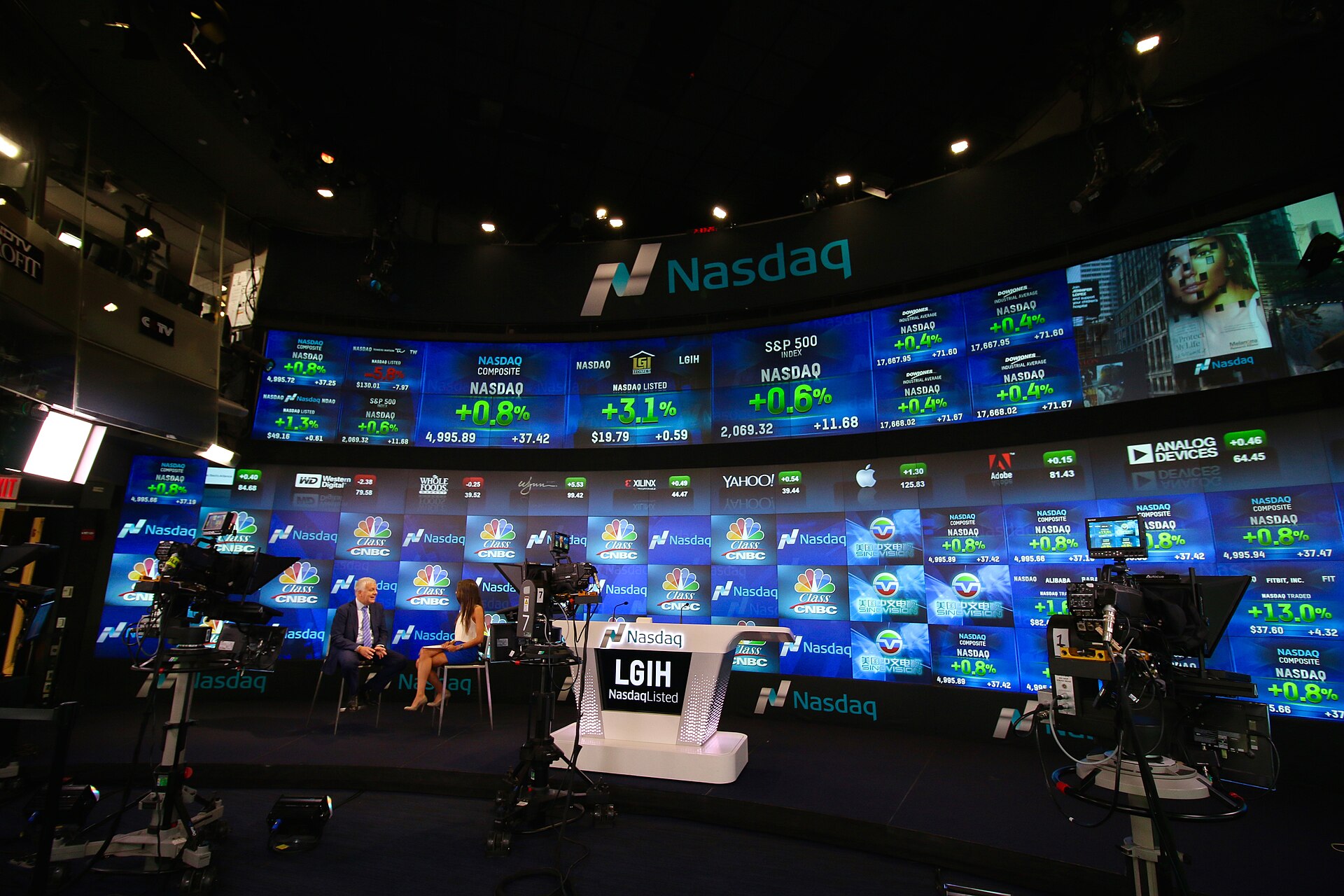
Market Focus
US listings, nothing else
Focus is everything. Our entire talent network, market knowledge and banking resources go all-in on NASDAQ and the NYSE.
Home/US Listings Only
Focus is everything. Our entire talent network, market knowledge and banking resources go all-in on NASDAQ and the NYSE.
Focus is what makes us excellent. Our entire talent network, market knowledge and banking relationships are all-in on NASDAQ and the NYSE.
Clear boundaries are our promise: if we don't know the battlefield, we don't take the mandate.
Treating the two exchanges as a single "bar" is a common simplification. The real differences are mechanical: tier structure, investor composition, market-making and liquidity arrangements, and what each asks during review. Choosing wrong will not stop a listing, but it affects post-listing trading and the ability to raise again.
Nasdaq operates three tiers, moving from large seasoned issuers to mid-cap growth companies to smaller issuers. NYSE is also tiered, positioned more toward established large caps. A tier is not permanent — you can move up when you qualify, and you will be required to remedy or face a lower tier if you fall below continued-listing standards. So the choice is not "the best tier", it is the one you can hold after listing. Specific financial and liquidity thresholds follow the exchange's current rules and are revised from time to time; we do not copy numbers onto this site, and we check each item against the latest standard when advising.
Technology and biotech issuers find deeper analyst coverage and institutional pools on Nasdaq. Traditional industries, financials and large industrials carry a higher share of long-only capital on NYSE. This often matters more to valuation than fee differences — no coverage means no liquidity, and no liquidity means a discount at the next raise.
Both exchanges press on the same things: is the cap table clean, are related-party dealings at arm's length, is management stable, are use-of-proceeds stated concretely, is there material dependence on a single customer or supplier. The difference is style and pace, not the standard. Any claim that one exchange is "easier to pass" deserves a request for evidence.
Market convention ranges: traditional IPO 12–18 months, reverse merger 4–8 months, SPAC merger 6–10 months, direct listing faster but without new capital. Ranges are reference points; the real question is which route does not hold for you.
The four routes are not ranked by sophistication. For many companies the right path is a reverse merger to obtain a ticker, one to two years of real work on financials and controls, then an uplisting — slow, but controllable. Forcing a reverse merger when you actually qualify for an IPO trades long-term valuation for short-term speed.
This is a boundary of capability, not a judgement of value. Stating the boundary is more responsible than claiming to cover every market.
Banking runs on specific people: which audit partner at which firm, which capital markets group at which law firm, which bookrunner on which syndicate. Our network sits on the US line — PCAOB-registered firms, US securities counsel, underwriters currently reviewing with Nasdaq and NYSE. Hong Kong and A-share work is a different set of people. Switching markets means building a network from zero, and that is measured in years.
The US model is disclosure-driven with SEC comment. Hong Kong leans on sponsor responsibility and compliance with listing rules. A-shares run a review-and-registration regime heavily shaped by domestic regulatory cycles. Each judges "what kind of company can list" differently, and a document package built for the US largely cannot be reused. Teams claiming all three markets are usually shallow in all three.
A US-listed CFO must handle SOX 404, 20-F / 10-K disclosure and English-language roadshow Q&A. Hong Kong emphasises work with sponsors and the onshore business. The A-share board secretary system is another discipline entirely. Put the same candidate into the wrong market and a strong CV solves nothing. We stock one line of people.
Doing only US listings means every case, every adviser relationship and every failure lesson sits inside one rule set. What a client gets is not "we also do this", but "we have seen this many times and know where it usually dies". That is what we trade market size for.
No. 51CFO works the US market only: NASDAQ, NYSE, NYSE American, OTC and SPAC & De-SPAC. Hong Kong, A-shares including the STAR Market and ChiNext, the Beijing Stock Exchange and NEEQ, plus Singapore and London, are all out of scope.
It depends on financial size and sector. NASDAQ has three tiers — Global Select, Global Market and Capital Market — with descending thresholds suited to growth companies of different sizes. NYSE and NYSE American take a different path on earnings record and governance. Which tier fits depends on your metrics, liquidity and window; we lay the comparison out in the route diagnosis.
Strictly, an OTC quotation is not an exchange listing. The usual route is to obtain a ticker and trading record on OTC first, then uplist to NASDAQ or NYSE once the exchange thresholds are met. Note that under the 2026 rules a China-based issuer must also have traded continuously on the prior market for at least one year before uplisting.
Nasdaq Rule 5210(l) was approved by the SEC on 14 May 2026 and took effect on 13 June 2026, with a look-through test covering mainland China, Hong Kong and Macao (an issuer counts as China-based if more than 50% of key attributes are China-linked): an IPO must raise at least US$25 million in a firm commitment offering; after a SPAC, reverse merger or similar combination the Market Value of Unrestricted Publicly Held Shares must be at least US$25 million; direct listings are limited to the Global Select Market; and OTC uplisting requires at least one year of continuous trading. Always check the exchange's current rulebook.
It is, but both the thresholds and the requirements have moved. A De-SPAC files S-4 / F-4 and Rule 424(b), carries the full weight of SEC comment, must meet the new US$25 million unrestricted public float test after closing, and takes on sponsor-promote dilution and shareholder redemption risk. Whether it is worth it depends on your financial base and window.
A 30-minute listing-route diagnosis: we assess which route fits you, the timetable and the gaps on your team, and set out the next steps. Free, and fully confidential.